Your furnace clicks a few times, maybe catches, then goes quiet again. Or it lights just fine and shuts itself off ten seconds later. Either way, the house is getting colder and you’re standing by the thermostat wondering what actually broke.
Most of the time, the answer is one of two small parts: the ignitor or the flame sensor. They sit inches apart inside the burner compartment and they fail in different but easy-to-mix-up ways. Below is what each one does, the specific signs that point to each, when a noisy or weak-airflow furnace is actually a blower motor problem instead and what repair typically costs so you’re not guessing.
How the ignitor and flame sensor works?
When your thermostat calls for heat, the ignitor reacts first. It’s a small ceramic element that heats up in seconds, hot enough to light the gas the moment the valve opens. That part is straightforward.
The flame sensor’s job is strange and just as important. It’s a thin metal rod that sits directly in the flame path. Once the burner lights, the sensor uses the flame itself to carry a tiny electrical signal back to the control board, confirming combustion is actually happening. No signal, no continued gas flow. The furnace closes the valve within a second or two rather than let unburned gas build up in the chamber.
Signs your furnace ignitor is failing
An ignitor rarely fails without warning. Watch for these patterns:
- Repeated clicking with no flame. The system tries to ignite over and over and you can hear it, but the burners never catch.
- The blower runs but the air stays cold. Air is moving through the vents, so the fan and thermostat are doing their jobs, but there’s no heat behind it.
- No orange glow through the viewing window. A healthy hot surface ignitor glows bright orange for a few seconds at the start of each cycle. If it stays dark, or barely glows, it’s on its way out.
- Visible cracks or white blistering on the ceramic tip. Ignitors are fragile. Years of heating and cooling cycles create hairline stress fractures you can sometimes spot with a flashlight.
- A furnace that worked fine last week and simply won’t start today. Ignitors don’t always fade gradually. Many just stop working between one heating cycle and the next.
Most hot surface ignitors last somewhere in the range of 4 to 8 years. If your furnace falls in that window and any of the above sounds familiar, the ignitor is a reasonable first suspect.
Signs your flame sensor needs repair
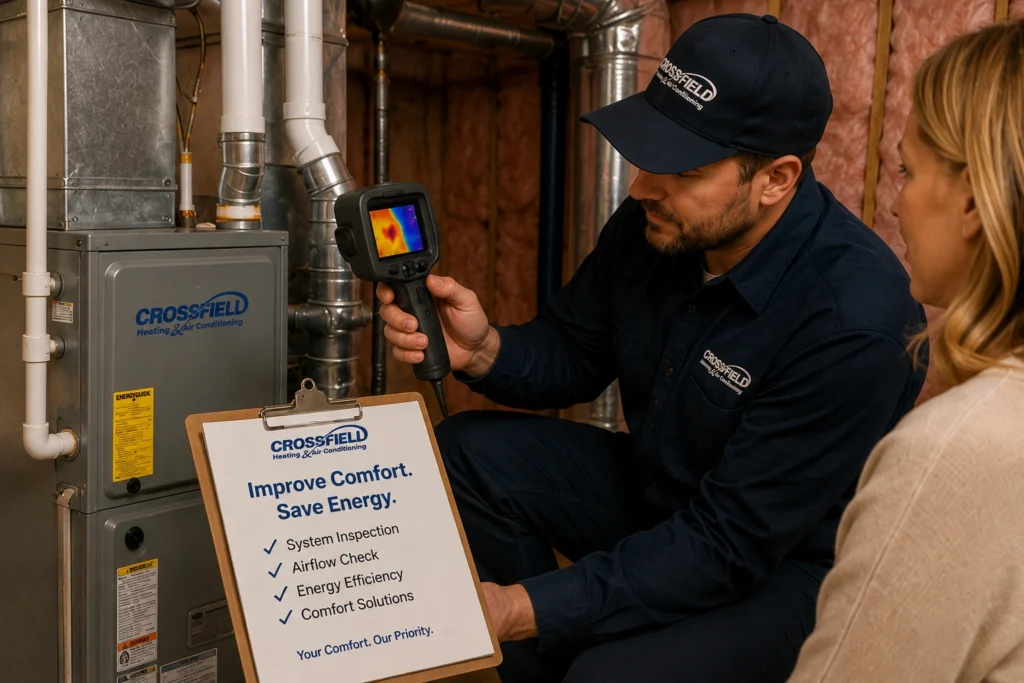
A flame sensor almost never fails outright. It gets dirty and dirt reads to the control board exactly like no flame at all. Here’s what that looks like from your side of the furnace:
- The furnace lights, then shuts off within a few seconds. This is the single most common flame sensor symptom. Combustion starts fine, but a layer of soot on the rod keeps the sensor from detecting it, so the system assumes something’s wrong and cuts the gas.
- It restarts itself two or three times before staying lit, or never does. Each attempt burns for a few seconds, then quits again.
- The burner flame looks yellow or orange instead of blue. That points more toward a combustion problem than the sensor itself, but the two often show up together and both deserve a technician’s eyes on them.
A dirty sensor is an easy fix. A cracked or corroded one is not and it needs replacing rather than cleaning. Telling the two apart without pulling the burner assembly is hard to do reliably and a gas furnace is not where guessing pays off.
Short cycling shows up with both of these parts, which is exactly why it trips people up. Here’s how to tell the difference.
Why furnaces short cycle?
Short cycling means the furnace starts, runs briefly then shuts off and restarts, often every few minutes. In most homes it traces back to one of three things: a dirty flame sensor, a clogged air filter restricting airflow or a failing ignitor that can’t sustain a strong enough glow to keep the flame lit long enough to be detected.
A filter clogged with a season’s worth of dust chokes airflow across the heat exchanger. The furnace overheats, a safety switch trips and the cycle repeats. It’s the cheapest possible cause and the first thing worth checking yourself before assuming a part has failed.
If you’ve already swapped the filter and the short cycling continues, or if what you’re actually noticing is weak airflow rather than a stop-start pattern, the blower motor deserves a look.
When weak airflow or no fan points to the blower motor?
The ignitor and flame sensor control whether your furnace makes heat. The blower motor controls whether that heat reaches your rooms and it fails independently of the two ignition parts above.
- Vents that used to blow strong now just trickle. A weakening motor, a failing capacitor, or a blower wheel caked in dust can all cut airflow well before the motor quits completely.
- The furnace runs and makes heat, but the fan never kicks on. You’ll feel warm air building up near the furnace itself while the rest of the house stays cold, since nothing is pushing it through the ducts.
- A burning smell in the first few minutes of a heating cycle. Dust burning off a motor that’s been sitting idle is normal for a day or two into the season. If the smell lingers past that, the motor may be overheating.
- Higher energy bills with no other obvious cause. A struggling motor draws more power to move the same amount of air and it shows up on the utility bill before it shows up as a total failure.
Blower motor repair cost swings more than ignitor or flame sensor cost, mostly because of motor type. Older furnaces typically run a simpler, cheaper single-speed PSC motor. Many newer systems use an ECM, which adjusts its own speed for better comfort and lower energy use, but costs more and has to be correctly matched to the control board. That difference alone can move a repair from the low end of the range to the high end.
Why does your furnace suddenly sound loud or unusual?
Noise complaints are some of the easier calls to diagnose, because different sounds tend to point to different parts. A rhythmic clicking during startup is usually the ignitor attempting and failing to fire. A loud bang or boom right as the burners catch means gas built up before ignition, a problem called delayed ignition and it’s worth shutting the system down and calling the same day rather than waiting. Squealing points to a blower motor bearing or, on older units, a slipping belt. Rattling or scraping usually means something loose, often the blower wheel itself, striking the housing as it spins. None of this is DIY territory. Opening the burner compartment on a running gas appliance isn’t worth the risk to you or the part.
Here’s a quick reference for matching what you’re hearing or feeling to what’s likely wrong and roughly what professional repair runs in most cases.
| What You’re Noticing | Likely Part | Typical Repair Cost, Installed |
| Repeated clicking, no flame | Ignitor | 150–450 |
| Lights, then shuts off within seconds | Flame sensor | 150–300 |
| Cold air, fan running fine | Ignitor or gas valve | 150–450 |
| Weak airflow, motor still runs | Blower motor or capacitor | 150–900 |
| No fan, furnace produces heat | Blower motor | 300–900 |
| Squealing or rattling | Blower motor/bearing | 150–900 |
These are typical ranges, not a quote. Your technician still needs to confirm what actually failed before any part gets replaced, since a single symptom can have more than one cause.
Repair or replace? when to call
A single failed ignitor or flame sensor almost never justifies replacing the whole furnace, even on an older system. Those are inexpensive, commonly replaced parts. The math changes with the blower motor, partly because it costs more to begin with and partly because a blower motor failure on a furnace already past 12 to 15 years old is often a sign the rest of the system isn’t far behind.
A few questions help sort it out. How old is the furnace? Most gas furnaces last 15 to 20 years with regular maintenance, so a motor failure at year 8 gets repaired, while the same failure at year 17 might be the tipping point toward a new system. Has this furnace needed other repairs recently? Two or three service calls in two years for unrelated parts is a pattern, not bad luck. And how does the repair cost stack up against replacement? As a rough guide, Crossfield technicians use a straightforward rule: when a repair would run more than half of what a full furnace repair and replacement would cost, replacement is usually the better use of the money long-term.
None of that is a decision you need to make alone, or on the spot.
What to check before you call?
- Confirm the thermostat is set to heat and the batteries aren’t dead, since a blank or unresponsive display looks a lot like a furnace problem.
- Check the breaker panel for a tripped switch. Furnaces run on a dedicated circuit and a tripped breaker cuts everything, including the ignitor and blower.
- Pull the air filter and hold it up to a light. If you can’t see light through it, replace it. A clogged filter causes or worsens most of the symptoms above.
If those check out and the furnace still isn’t behaving, it’s time to call.
Make furnace repair simple with Crossfield?
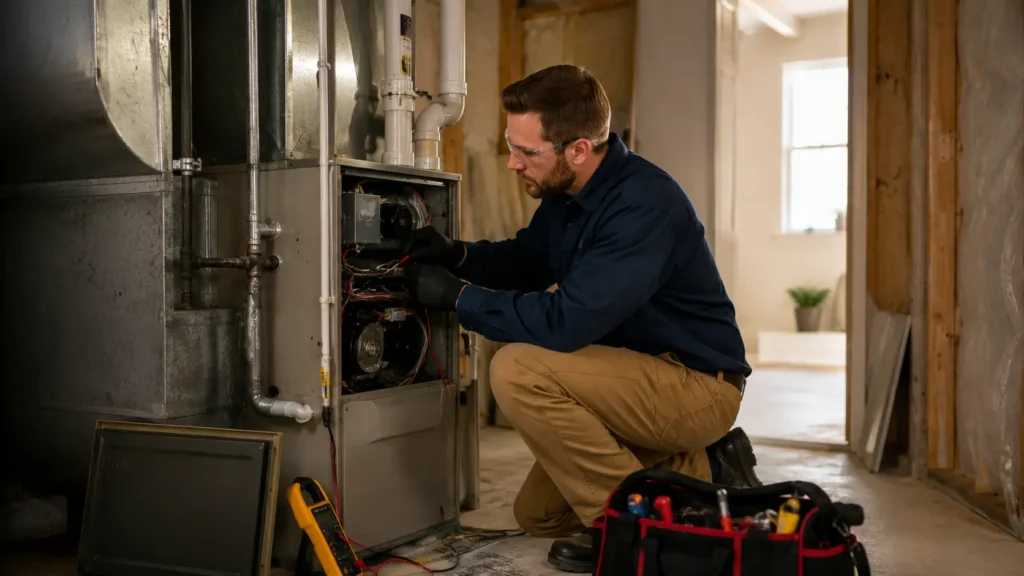
Crossfield technicians are NATE-certified and GPS-dispatched trucks carry the ignitors, sensors and motors most local furnaces use, so repairs usually finish in one visit. Work is backed by our 2-Year Labor Warranty and we’re reachable 24 hours a day, 365 days a year, not a voicemail that gets returned in the morning.
Annual maintenance catches a dirty flame sensor or a stressed ignitor before either one leaves you without heat. Crossfield’s precision tune-up checks both every fall and homeowners on the Comfort Club maintenance plan get priority scheduling if something does fail mid-winter.
Common questions about ignitor and flame sensor problems
How much does it cost to replace a furnace ignitor?
Most professional ignitor replacements run $150 to $450, depending on the part and how easy it is to access.
Can I clean a flame sensor myself?
Cleaning a lightly sooted sensor is a low-risk job for some homeowners, but telling soot apart from a cracked base or wiring fault takes a trained eye. When in doubt, have a technician confirm it.
Why does my furnace turn on and then shut off a few seconds later?
This is almost always a flame sensor that can’t detect the flame through buildup, though a weak ignitor or a clogged filter can cause the same pattern.
How long do furnace ignitors and flame sensors last?
Ignitors typically last 4 to 8 years. Flame sensors can last much longer with routine cleaning, but soot buildup can cause problems well before that.